


“I Am Somebody”: Reimagining SEL for Special Education Through Jesse Jackson’s Legacy.
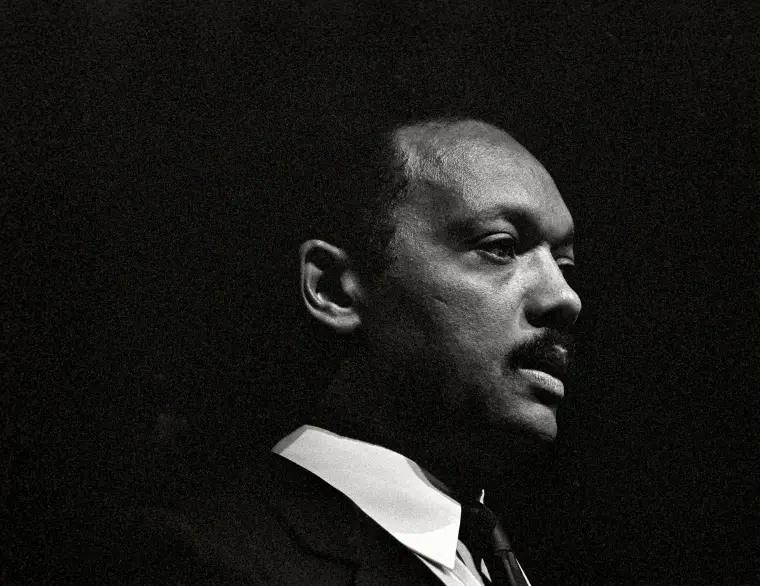
When we hear the words “I am somebody,” many of us immediately think of Jesse Jackson standing before crowds, leading a call-and-response that felt both spiritual and political.
But that declaration was more than a chant.
It was identity work.
It was psychology.
It was social-emotional learning before we ever called it that.
As educators, especially those of us serving students in special education, we have to recognize something that doesn’t always make it into the curriculum guides: many of our students are quietly wrestling with whether they matter.
Not academically. Not behaviorally. Existentially.
When a child is pulled out for services. When they sit in meetings where adults talk about deficits. When they see charts tracking behavior more than strengths. When they internalize labels before they even understand them.
The unspoken question becomes: Am I less?
That’s why “I am somebody” is not just inspirational. It is an intervention.
SEL Must Start With Identity
Social Emotional Learning often focuses on regulation — calming strategies, coping tools, replacement behaviors, problem-solving skills. Those are important. But if we teach regulation without identity, we risk teaching students to manage emotions in a system that has never affirmed their worth.
Self-regulation without self-worth is fragile.
For students receiving special education services, identity is constantly being shaped by external definitions: eligibility categories, data points, goals, and progress reports. If we are not intentional, the narrative they absorb can become one of deficiency rather than difference.
What would happen if we centered SEL in special education around dignity first?
Imagine a classroom where students regularly hear that their brains work differently, not worse. Where accommodations are framed as tools, not evidence of limitation. Where IEP meetings begin with strength stories before moving into needs. Where students are explicitly taught to understand their learning profile in empowering language.
That is “I am somebody” in practice.
The Power of Language in Special Education Spaces
The language we use with students matters deeply. Not just what we say during instruction, but what we say around them. When we describe a child as “low,” “behind,” or “behavioral,” even casually, those words accumulate. Over time, they become identity markers. But when we say, “You learn best when…” instead of “You struggle with…,” we shift the lens. When we explain services as access rather than remediation, we shift the narrative.
When we teach self-advocacy as a form of dignity — not defiance — we build agency.
And for students of color who are disproportionately represented in certain special education categories, identity work becomes even more critical. Race, disability, and systemic bias can intersect in ways that quietly erode confidence. An affirmation like “I am somebody” becomes protective. It pushes back against internalized deficit thinking. It disrupts learned helplessness. It restores voice.
SEL, in this light, is not just about behavior management. It becomes liberation work.
Moving From Compliance to Worth
Too often, SEL in special education becomes synonymous with compliance, helping students control impulses, follow directions, and reduce disruptions. While skill-building is essential, it cannot be the whole story.
What if we asked ourselves different questions?
Do my students feel seen?
Do they hear strength when I talk about them?
Do they understand that needing support does not diminish their intelligence?
Do they believe they belong here?
When a student truly believes, “I am somebody,” regulation becomes more sustainable. Persistence increases. Self-advocacy strengthens. Mistakes feel survivable instead of defining. Self-worth fuels resilience. And that is the foundation of real social-emotional growth.
Why This Matters Now
The legacy of leaders like Jesse Jackson reminds us that affirmation has always been a form of resistance. Declaring worth in a world that questions it is powerful.
In special education spaces, affirmation is not extra. It is essential.
Every child navigating an IEP, every student receiving accommodations, every learner who processes the world differently deserves to internalize one unshakable truth: You are not your label. You are not your test score.
You are not your behavior chart.
You are somebody.
A Note to the “What The Psych?” Community
On my podcast, What The Psych? Voices From the Margin, I often talk about centering voices that are overlooked, especially students and families who don’t always see themselves reflected in systems designed to support them.
This conversation about “I am somebody” fits directly into that mission.
If we want to transform special education, we cannot only adjust interventions. We must reshape identity narratives. We must teach skills, yes — but we must also teach worth. Particularly for students of color, for students with disabilities, and for families who have felt unheard in educational spaces.
Affirmation is not soft work. It is structural work. It is psychological work. It is justice work.
And maybe the most radical thing we can teach in any SEL lesson is this:
Say it with me.
I am somebody.



Comments